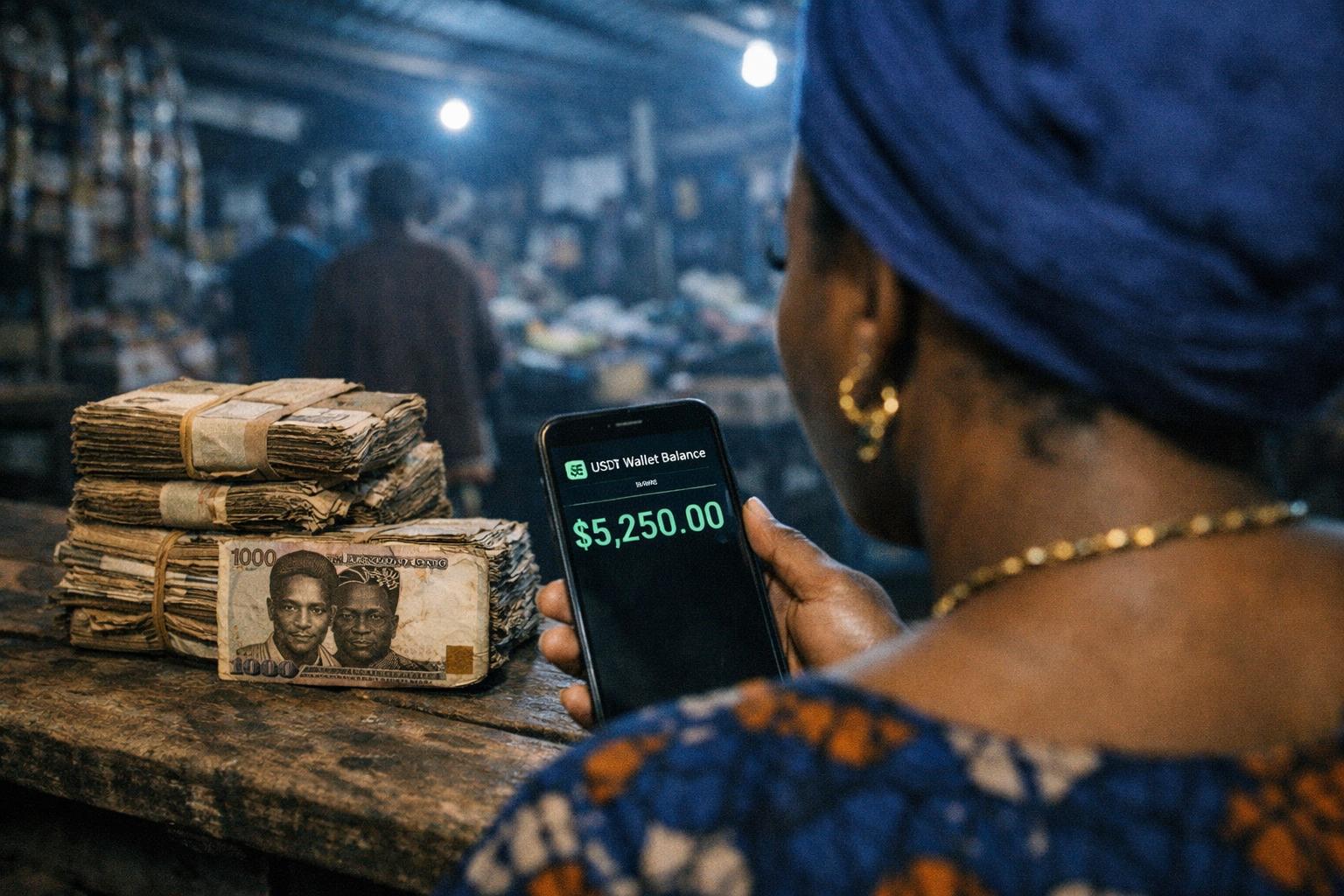

Nigeria has 26 data centre facilities operating or planned, the second-largest count on the continent. Neither AWS nor Microsoft operates a region there. Both run major facilities in South Africa instead, the closest hyperscaler region to Lagos.
The gap is not a pipeline problem. It is a power problem, and it does not close on a construction timeline.
Nigeria's national grid has never exceeded 6 gigawatts of capacity, serving 230 million people. South Africa's grid runs 48 gigawatts for 63 million. A hyperscale data centre campus alone can draw 50 to 100 megawatts continuously. Nigeria's entire grid has little room to spare for that load before touching every other user on it.
Techpoint Africa's reporting on the hyperscaler question names power first. Supply chain risk and a shortage of contractors with genuine Tier III or Tier IV construction experience follow close behind. One infrastructure executive put the capital risk plainly. Material stuck at port, or a stoppage in construction, locks capital without generating value. Nxtra by Airtel is building a 38 megawatt Lagos campus aiming for hyperscale readiness by 2026. Nigeria's installed IT load could pass 150 megawatts by 2027 if every announced project lands. That is real progress. It still describes a market operating one order of magnitude below the power headroom a hyperscaler region requires.
Kenya took a different route. Microsoft's $1 billion investment there, partnered with G42, targets a geothermal-powered 100 megawatt facility by 2026. IXAfrica has a second hyperscale facility planned at 53 megawatts. Geothermal power does not compete with Kenya's residential and industrial grid the way a new gigawatt-scale load would in Lagos. The power source, not just the capital, is what makes the timeline credible.
The article that ran on this thread in June argued the AWS Cape Town premium was a supply problem. It set a close date of 24 to 36 months. That argument needs correcting.
South African cloud providers are warning of sustained price increases through 2026, not decreases. AI infrastructure demand has pushed data centre construction costs to an average of $10 million per megawatt. Mid-size installations that cost $200 million to $300 million two years ago now run $500 million to $2 billion. South Africa's own data centre market is still forecast to grow at nearly 13 percent annually through 2031. The cost base under that growth is rising, not falling. The AWS premium was never going to close through supply alone. Not while the supply itself gets more expensive to build.
Cost parity, where it happens, will not happen uniformly across the continent. It depends on which markets have power headroom cheap enough to absorb a hyperscale load. That load cannot inflate everyone else's electricity cost. That currently means Kenya, on geothermal, and South Africa, on a grid whose scale advantage is real. South Africa's build costs are rising regardless. Nigeria's power ceiling is not a 2026 problem or a 2028 problem. It is the same structural constraint on what builders can design for that shows up everywhere else power touches product.
For a founder deciding where to architect for latency and cost, the planning question has changed. It is no longer "when does the AWS premium close." It is "which market's power source lets local infrastructure get cheaper while everyone else's gets more expensive."
Kenya's geothermal bet answers that question better than anywhere else on the continent right now. Nigeria's 26 facilities represent real capital and real ambition. They operate against a grid that was never sized for what a hyperscaler needs. Building for Lagos latency today still means building for the Cape Town premium, indefinitely, not provisionally. The infrastructure gap that matters is no longer measured in months of construction. It is measured in gigawatts that do not exist yet, on a grid that has never had them.